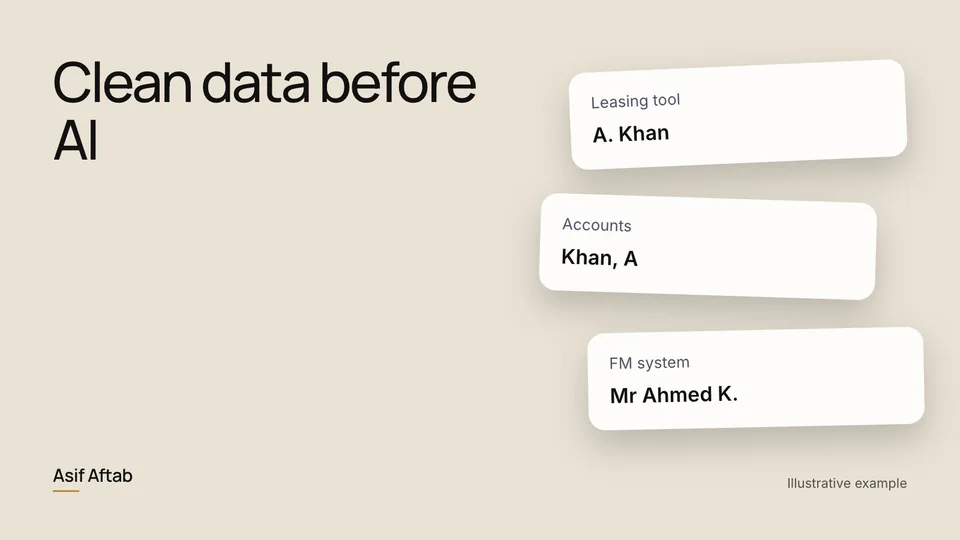
Data Governance and AI
Clean data first: why AI fails on disconnected operations
AI in property operations is only as useful as the records behind it. Why disconnected data defeats it, where it genuinely helps, and what to fix first.
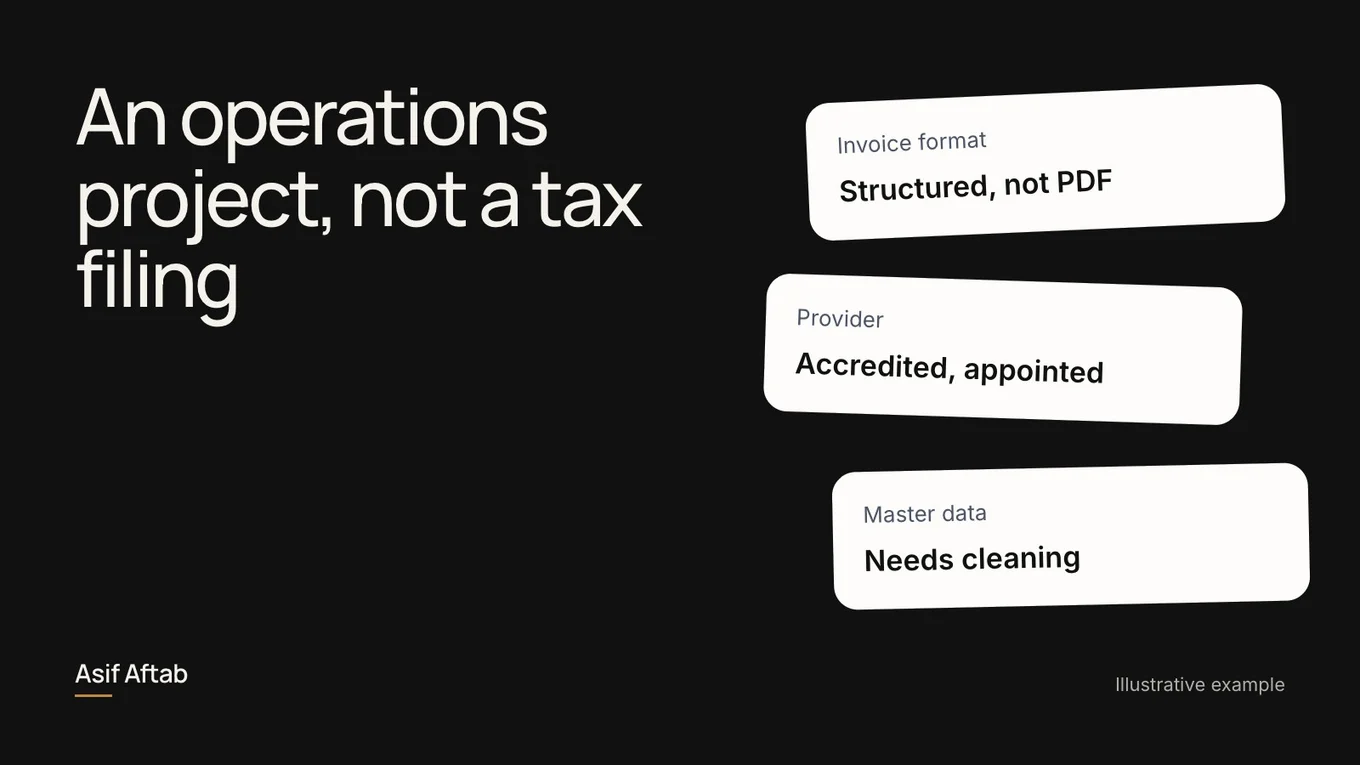
UAE e-invoicing is often treated as a tax task, but most of the work sits in operations. Invoices must become structured data, sent through an accredited provider. That exposes weak master data, loose approvals and scattered billing. Firms with annual revenue of AED 50 million or more go live on 1 January 2027.
Most firms hand e-invoicing to the finance team and ask for a progress update. That is a natural reaction. The word “invoice” suggests accounting, and the word “tax” suggests a filing.
In practice, it reaches much further. An e-invoice is structured data, not a document. It can only be as good as the records behind it.
A property or FM firm raises invoices from leases, service charges, jobs and contracts. So the project runs through leasing, FM, procurement and finance at once.
The Ministry of Finance announced a phased rollout. Here is how it was reported.
UAE e-invoicing phases
If you are in the first group, the provider deadline has already passed. If you are in the second, 31 March 2027 is closer than it looks once data work is counted.
Today, an invoice can be fixed by hand before it goes out. Someone corrects the name, adjusts the wording and sends a PDF. Structured invoices remove that safety net.
The change in one picture
So the quality of your underlying records stops being an internal matter. Weak data becomes rejected or incorrect invoices.
Some features of this industry make the work heavier than in a typical trading business.
| Area | Why it is harder here | Who owns it |
|---|---|---|
| Customer records | Same tenant or owner held in several tools | Leasing and finance |
| Billing sources | Rent, service charges and jobs billed separately | Finance |
| Advances and deposits | Advance payments must link to final invoices | Finance |
| Contracts | Milestones and retentions in FM and fit-out | Commercial |
| Approvals | Invoices approved over email or chat | Operations |
| Exceptions | Credit notes and corrections done by hand | Finance |
Reports on the rules also point to tax configurations, advance invoices and reconciliation of responses from the provider. Each of those is a process question before it is a software question.
Which of your transactions are in scope is a matter for your tax adviser. The operational impact is what this article covers.
Treat readiness as a short project with named owners.
A practical readiness plan
Step two is the slowest, and it is the one firms underestimate. It is the same work described in clean data before AI. Fix it once, and both projects benefit.
Leaving it to one person. A finance manager cannot fix leasing data alone. Name an owner in each team.
Starting with the provider. A provider moves invoices. It does not repair what goes into them. Do the data work in parallel.
Testing only clean cases. Real life includes credit notes, part payments and rejected invoices. Test those first, because they will happen in the first week.
Forgetting people. Finance, procurement and operations all change how they work. Plan some time for training, not only for configuration.
Compliance projects are rarely welcome. This one has a useful side effect.
To meet it, you must know where every invoice comes from. You must have one reliable customer record. You must be able to match what you billed to what you received, which also reduces reconciliation risk.
Those are the foundations of a connected operation. Firms that treat this as a filing will patch around the problem. Firms that treat it as an operations project will come out with cleaner data and fewer manual steps.
Pull twenty recent invoices across rent, service charges and maintenance. For each one, ask three questions.
Was the customer data correct first time? Was anything changed by hand? Was the approval recorded anywhere but a chat?
If your invoices had to pass a machine check tomorrow, how many of those twenty would go through?
The Ministry of Finance announced phases. Businesses with annual revenue of AED 50 million or more go live on 1 January 2027. Those below that go live on 1 July 2027. Government entities follow on 1 October 2027.
Reporting on the rules says a PDF alone will not meet the requirement for in-scope transactions. Invoices must be structured and machine-readable. Check the current rules for your own transaction types.
Reports on the rules say no. Businesses must appoint an Accredited Service Provider, which connects on their behalf. Confirm the requirements and your position with your tax adviser.
This is not legal advice. It explains operational impact only. Check the current rules with your adviser and the official sources.
A 20-question self-assessment is in preparation. Leave your email on the newsletter form to hear when it opens.

Real Estate Operations, Risk & Systems Advisor. 20 years in banking risk. Founder, Inovada.
AI in property operations is only as useful as the records behind it. Why disconnected data defeats it, where it genuinely helps, and what to fix first.

A reconciliation that balances can still hide risk. What old unidentified items really mean for a UAE property firm, and how to close the gap sooner.