Clean data first: why AI fails on disconnected operations
AI struggles in property operations because the data underneath is disconnected. If one tenant exists in four systems with four spellings, a tool cannot produce a reliable answer, however advanced it is. It will still answer confidently. So the first step is not choosing an AI tool. It is getting one trusted record.
The demonstration was impressive. Someone asked the assistant, in plain English, which tenants were at risk of not renewing. It produced a neat list in seconds.
Then the leasing manager read it. Two of those tenants had left. One had already renewed. Another appeared twice under different names.
The tool worked exactly as designed. The data did not.
AI is useful, and it will get more useful. But in most property firms, it is being pointed at records that cannot support it.
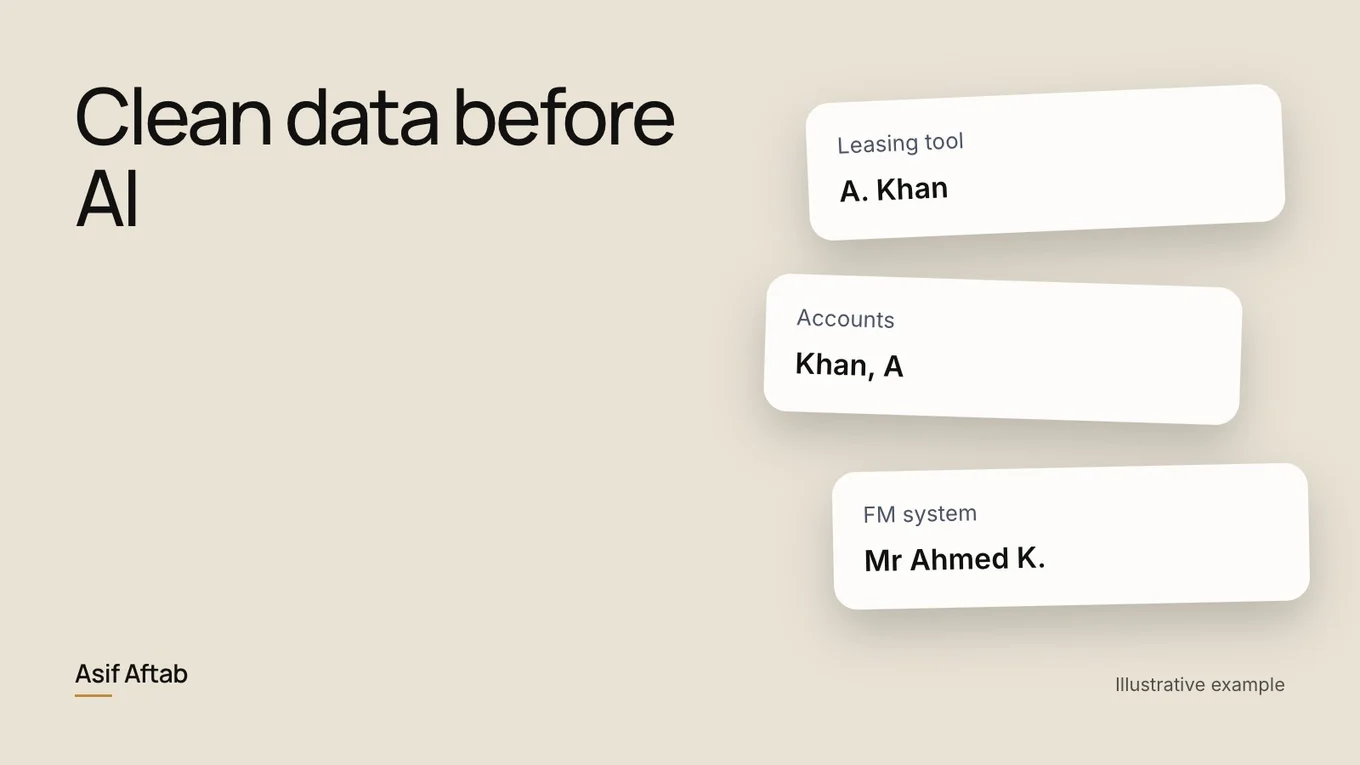
The same tenant, four ways
Here is a typical picture, using invented names.
System
Name on file
Unit
Rent
Leasing tool
A. Khan
1204
AED 96,000
Accounts
Khan, A
12-04
AED 92,000
FM system
Mr Ahmed K.
Tower B 1204
Not held
Rent roll file
Ahmed Khan (new)
Apt 1204
AED 96,000
A person reads this and works it out. Software has to guess. Is this one tenant or four? Which rent is right? The answer changes every report built on top.
Scale that across a few thousand records. Now you can see why outputs feel wrong without anyone knowing quite why.
Why AI makes this worse, not better
A messy spreadsheet looks messy. That is a kind of warning. A well-written AI answer looks finished, even when its sources conflict.
Same question, two foundations
Disconnected data
Conflicting versions
Confident answer
No way to check it
Staff lose trust quickly
One trusted record
One version of each fact
Answer links to its source
Easy to verify
Staff use it daily
A banker would recognise this risk. A clean report built on poor data is more dangerous than an obviously poor one. People act on it.
Where it genuinely helps today
None of this means waiting. Some uses need little structured data, and they carry low risk if a person checks the output.
How much clean data each use needs
Drafting repliesLow
Summarising leasesLow
Sorting job requestsMedium
Flagging exceptionsHigh
Forecasting arrearsHigh
A general guide, not a measurement. The further down the list, the more your records matter.
The pattern is clear. Tasks that use language tolerate messy data. Tasks that use numbers and relationships do not. The valuable uses, such as predicting arrears, sit at the demanding end.
What to fix first
You do not have to clean everything. Start with the records that everything else depends on.
The order of work
Agree the core recordsTenants, owners, units, leases and vendors.
Pick one home for eachOne system is the source of truth.
Merge the duplicatesName someone to decide which version wins.
Set entry rulesRequired fields, formats and unit naming.
Connect the restOther tools read from the source.
Then add AIStart small, and measure it.
Steps one to four also pay off on their own. They reduce errors and make reports faster. They are the same foundation needed for e-invoicing readiness.
Ownership matters as much as technology. If nobody is responsible for a record’s quality, it will decay again within a year.
The question of control
Before any tool touches your data, ask where that data goes. Tenant and owner information carries real obligations.
Scattered data makes this harder, for the reasons in the data paradox. You need to know where the data sits and who can reach it. Without that, you cannot set sensible rules for AI.
A short written policy is a good first step. It should say what staff may use and who approves new tools. It should also list what must never go into a public tool.
Questions to ask any AI vendor
Before you sign anything, ask four plain questions. Where does our data go, and who can see it? Can the tool show which record each answer came from? What happens when two records disagree? Can we get our data back if we leave?
A good vendor will answer directly. If the replies are vague, that tells you something useful.
A sensible way to start
Choose one narrow problem. For example, drafting first replies to routine maintenance messages. Keep a person in the loop, and measure time saved and errors found.
If it works, expand. If it does not, you have lost little. Avoid buying a large platform in the hope that it will sort out your data. It will not.
Check this on Monday
Pick ten tenants at random. Look each one up in every system you use.
Count how many match exactly on name, unit and rent. That percentage is a fair measure of your readiness.
If an AI tool answered a question from your data today, how would you know whether to believe it?
Common questions
Where does AI genuinely help property firms today?
It is useful for drafting routine replies, summarising long documents, sorting maintenance requests and spotting exceptions in clean data. In each case, a person should still review the output.
How clean does data need to be before using AI?
It does not need to be perfect. Core records such as tenants, units, owners and leases should have one trusted version, with consistent fields and clear ownership.
Is it safe to paste tenant data into a public AI tool?
Treat this with caution. Personal data needs care under data protection rules. Set a clear internal policy, and check how each tool stores and uses what you enter.
Real Estate Operational Risk Scorecard
A 20-question self-assessment is in preparation. Leave your email on the newsletter form to hear when it opens.
Firms refuse to give a systems partner access to tenant data, yet it already sits in laptops, inboxes and chat groups. Why one controlled system is the safer option.
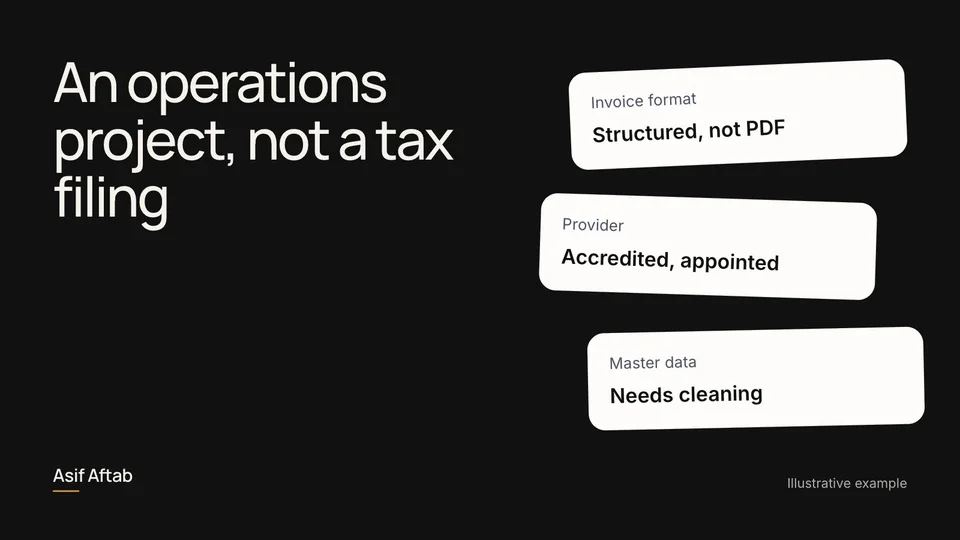
UAE e-invoicing starts in phases from January 2027. For property and FM firms, the hard work sits in master data, workflows and approvals, not in the tax return.