Operations
Owner statements built by hand: the real cost in hours and errors
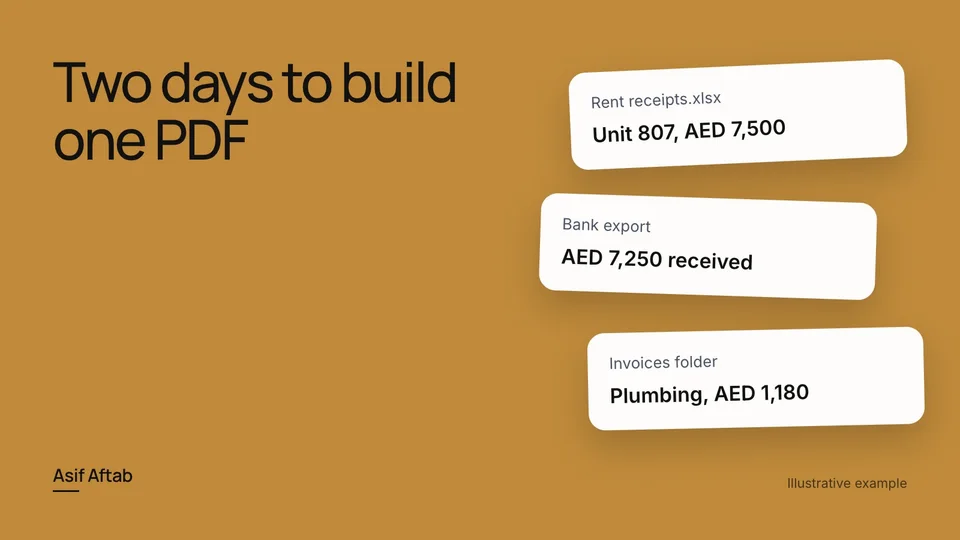
A monthly owner statement built by hand costs more than staff hours. It delays the close, hides errors and leaves nothing to prove the numbers with.
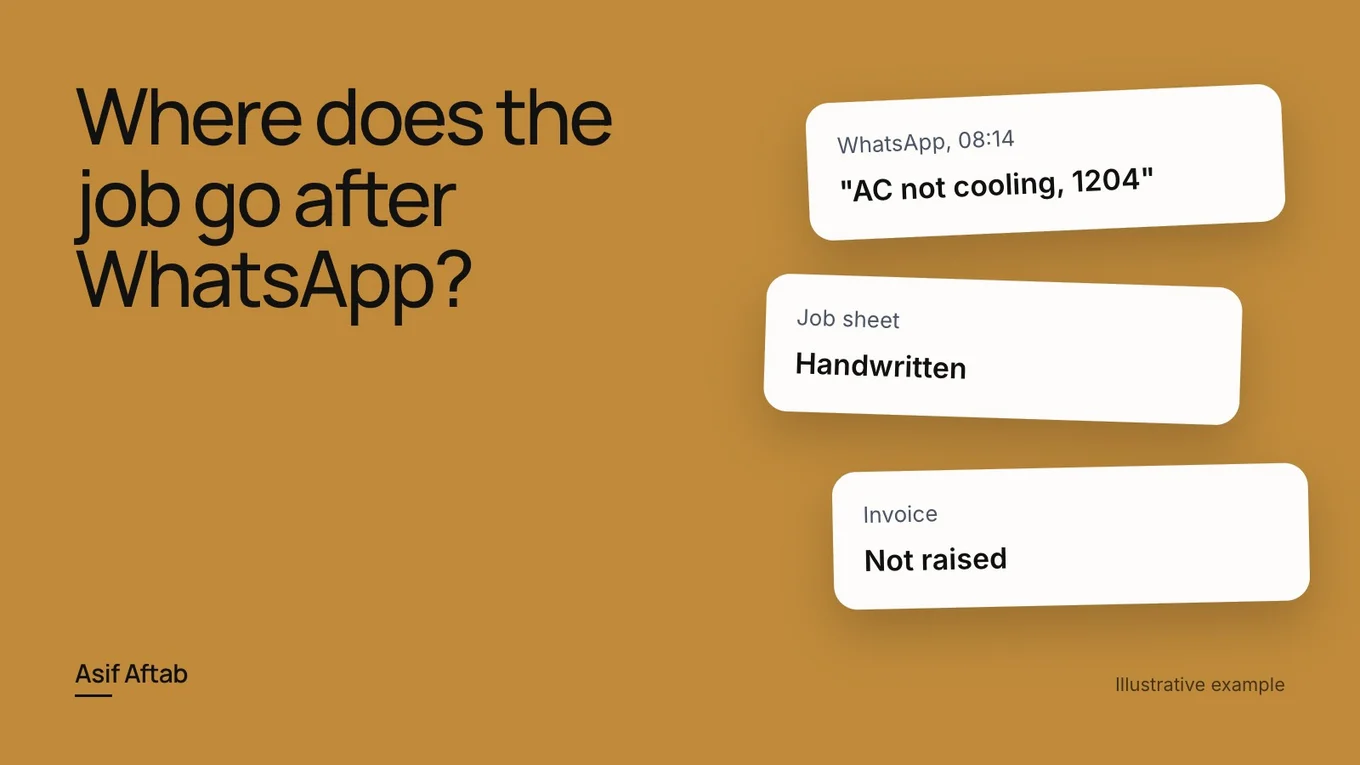
A maintenance request leaks money at its handovers. It starts in WhatsApp, moves to a technician, then a job sheet, then finance. At each step, details are retyped or lost. The result is work that was done but never billed, charged to the wrong owner, or impossible to prove.
It is 08:14. A tenant sends a message: the AC in 1204 is not cooling.
The building supervisor sees it and calls a technician. The job gets done by lunchtime. Everyone is pleased.
Three weeks later, finance has no invoice, no job sheet and no idea who should pay. The work happened. The money did not.
This example is illustrative, but property and FM teams will recognise it. Let us follow the request step by step.
The journey of one AC complaint
Nothing here is careless. Each person did their job. The failure sits between them.
Each handover loses something different. Some of it is time. Some is evidence. Some is cash.
| Handover | What gets lost | The cost |
|---|---|---|
| Chat to job | The request has no reference | Duplicate visits, no response time data |
| Office to technician | Unit history and warranty | Paying for work under warranty |
| Technician to job sheet | Materials and hours | Costs absorbed, not recharged |
| Job sheet to finance | Who is liable | Wrong owner charged, or nobody |
| Finance to owner | Proof of work | Disputes, write-offs, lost trust |
Look at the last row. A disputed AED 900 charge rarely costs AED 900. It also costs staff time, an awkward call and some of the owner’s confidence.
That doubt shows up later, in the owner statement, when the owner starts to query every line.
Unbilled work. The job was done, but no invoice followed. Nobody sees this, because nothing is missing from the accounts. The revenue simply never appeared.
Misallocated cost. The invoice went to the wrong owner, or into service charges when it should not have. This is usually found only after a complaint.
Unproven work. The invoice exists, but there is no evidence behind it. If an owner or association challenges it, you may have to credit it.
A simple test shows the size of this. Take last month’s completed jobs and match them to invoices. The gap is your leak.
The answer is not to ban WhatsApp. Tenants will keep using what is easy. The answer is to turn each message into a job at the first touch.
Same request, two operations
When the job carries the unit, the owner and the liability from the start, the invoice almost writes itself. Photos sit on the job, not in a chat. Response times become measurable.
One question causes more trouble than any other. Who pays for this job?
Is it the tenant, the owner, the service charge or a warranty? In many firms, finance answers this weeks later, from memory and a blurred photo of a job sheet. By then the facts are hard to establish, and a wrong guess becomes a dispute.
A better rule is to set the liability when the job opens. The person logging it chooses from a short list, using the lease and the unit history. If the answer changes after inspection, the change is recorded with a reason.
This one habit removes most misallocated costs. It also tells technicians whether they need approval before spending, which avoids surprise bills for owners.
Once jobs are records, three numbers become easy to see. They are worth reviewing weekly, alongside your other Monday numbers.
The second number is the one that tends to surprise people. It is money already earned and not yet asked for.
Take ten maintenance jobs completed last month. For each one, find the original request, the proof of work and the invoice.
Note how many have all three. Then note how many people you had to ask.
If an owner challenged one of those jobs today, what could you actually put in front of them?
As a front door, it is fine. Tenants like it. The problem starts when the chat is also the record, because nothing in it links to a job, a cost or an invoice.
It is work that was completed but never invoiced, usually because the completion detail never reached finance. It often stays invisible until someone compares job records with invoices.
At minimum: who did it, when, what was done, what materials were used, and a before and after photo. Ideally the tenant or site contact also confirms completion.
A 20-question self-assessment is in preparation. Leave your email on the newsletter form to hear when it opens.

Real Estate Operations, Risk & Systems Advisor. 20 years in banking risk. Founder, Inovada.
A monthly owner statement built by hand costs more than staff hours. It delays the close, hides errors and leaves nothing to prove the numbers with.
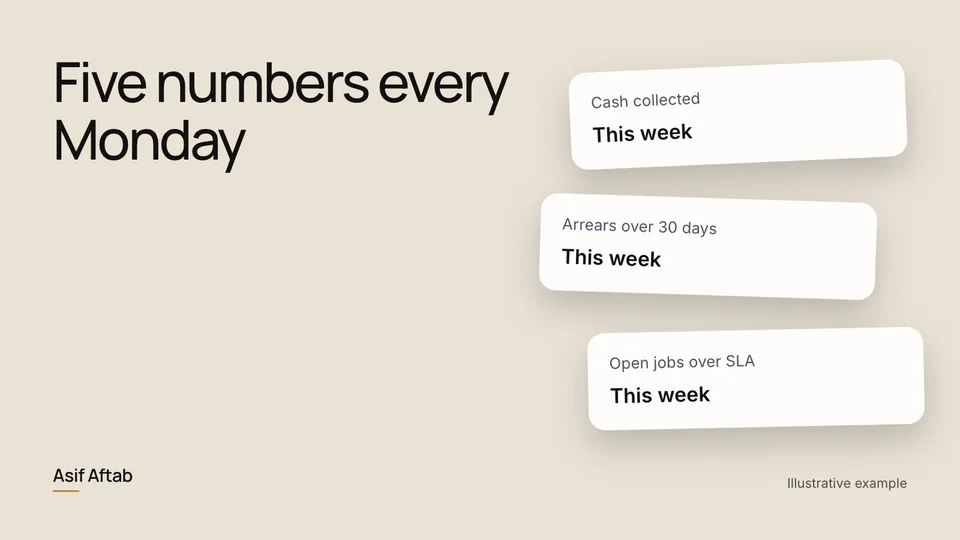
Five weekly numbers show whether a UAE property management firm is under control: cash, arrears, cheques, jobs and renewals. What each one tells you.