Risk and Compliance
Reconciliation risk: the gap between the bank and the ledger
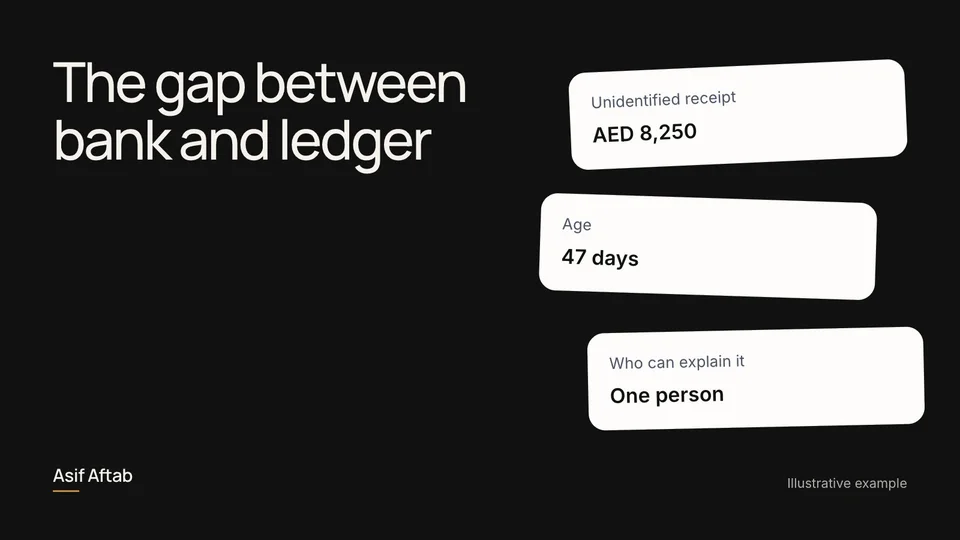
A reconciliation that balances can still hide risk. What old unidentified items really mean for a UAE property firm, and how to close the gap sooner.
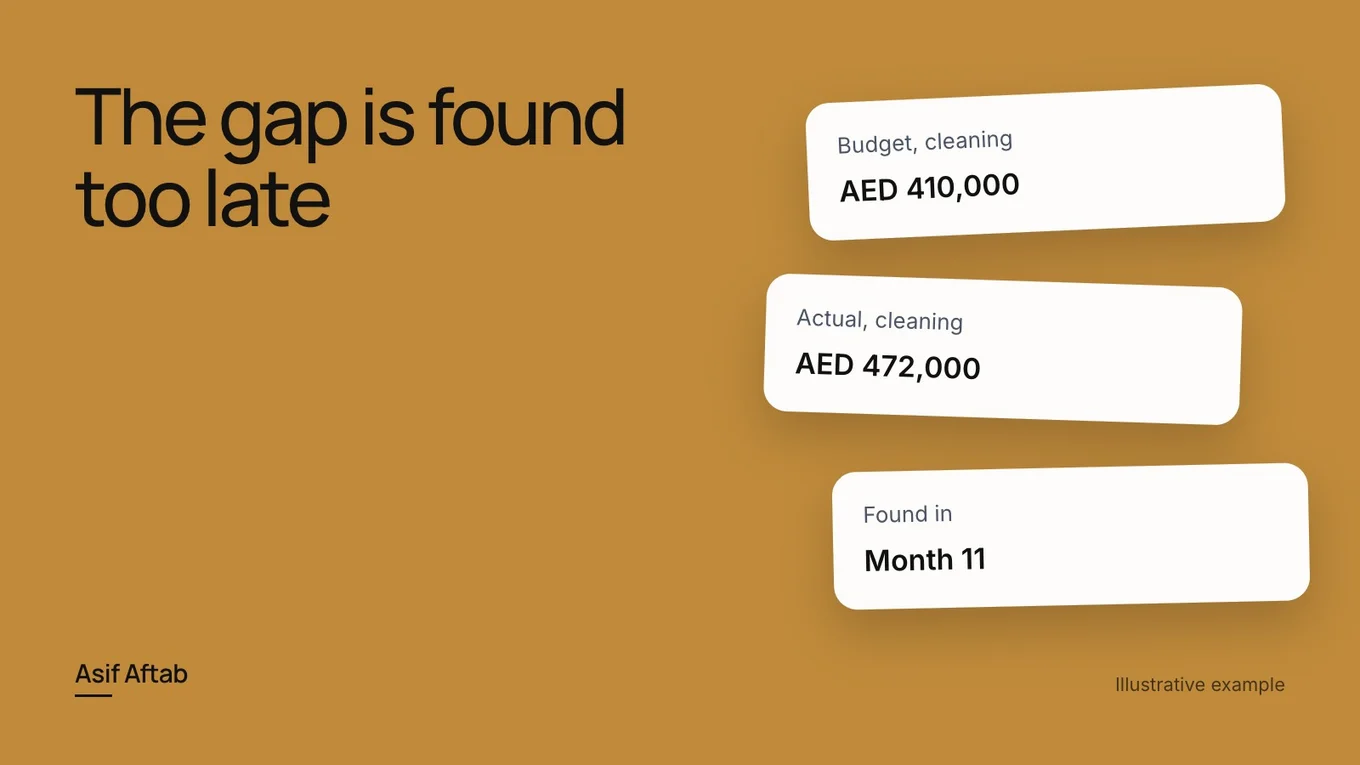
A service charge overrun is usually found late because budget and actual spending live in different places. The budget sits in a file, and costs arrive through invoices and contracts. If nobody compares them each month, a small drift becomes a large gap, and owners hear about it only at year end.
The owners association meeting is in three weeks. The finance manager runs the numbers. Cleaning is well over budget, and so is the lift contract.
Nobody did anything wrong this month. The overrun built up slowly, one invoice at a time. It was visible from month three. It is being discovered in month eleven.
This pattern is common because of how the work is organised, not because of who does it.
Take an illustrative building. The cleaning budget is AED 410,000 for the year, so about AED 34,000 a month. A contract change adds roughly AED 5,000 a month from March.
A monthly difference of AED 5,000 looks harmless. Over a year, it does not.
Cumulative overrun on one cost line
The point is timing. At AED 5,000, you have options. You can renegotiate, reduce frequency or move budget. At AED 45,000, you can only report it.
Four ordinary habits keep it out of sight.
| Habit | Why it hides the gap |
|---|---|
| Budget lives in a spreadsheet | It is built once, then rarely opened |
| Costs are coded loosely | Spend lands in “general maintenance” |
| Invoices arrive late | Actuals always lag reality |
| Commitments are ignored | Signed contracts are not counted until billed |
The last one catches many firms. A purchase order approved today does not appear in the accounts until the invoice arrives. So the report looks healthy while the money is already promised.
Loose coding has a related effect. If a third of spending sits in one vague line, no comparison means much. Someone must also be able to see who changed a cost code after posting.
A useful report shows more than budget and actual. It shows where the year is heading.
What each line should show every month
Forecast is what changes the conversation. It turns a historic report into an early warning. It lets a manager say, “We will be over on cleaning unless we act this month.”
Service charge money belongs to the owners. Your firm is responsible for looking after it. That raises the standard.
The bank and the ledger need to agree first, as covered in reconciliation risk. Then each major cost line needs a named owner, who explains variances in a sentence or two.
This does not need a long meeting. It needs a fixed rhythm.
A 30-minute monthly review
For example, you might set the tolerance at 5% of a line’s year-to-date budget. Choose what suits your portfolio, then keep to it.
The discipline is simple. The hard part is having data you trust. Invoices, contracts and approvals need to feed one connected record. Then nobody has to rebuild the picture every month.
“Invoices arrive too late to do this monthly.” Accrue what you know. A signed contract and a completed job are both known costs, even without an invoice.
“Our cost codes are too messy.” Start with the ten largest lines. They usually cover most of the spending, so the review pays off quickly.
“The board only looks at this once a year.” That is a reason to prepare earlier, not later. A surprise at the annual meeting costs far more than a short note in the spring.
Owners and association boards rarely object to an honest early warning. They object to a surprise. Most boards will accept a variance they heard about early, with a reason and a plan.
A short quarterly note goes a long way: budget, forecast, three biggest variances, and what you are doing about them. It shows control before anybody asks for proof.
Open your largest service charge budget. Pick its three biggest cost lines.
For each one, write down budget to date, actual to date, and spending already committed. Time how long this takes.
If the board asked today where this year will finish, how sure would your answer be?
Monthly, by cost line. Quarterly reviews often find a problem after two more months of spending. A short monthly variance report is easier to act on.
Spending you are already bound to, such as a signed contract or an approved purchase order, even though the invoice has not arrived. Leaving it out makes the position look better than it is.
A simple view of budget, actual and forecast by major cost line, with a short reason for any large variance. Early, plain reporting builds more trust than a clean year-end surprise.
A 20-question self-assessment is in preparation. Leave your email on the newsletter form to hear when it opens.

Real Estate Operations, Risk & Systems Advisor. 20 years in banking risk. Founder, Inovada.
A reconciliation that balances can still hide risk. What old unidentified items really mean for a UAE property firm, and how to close the gap sooner.
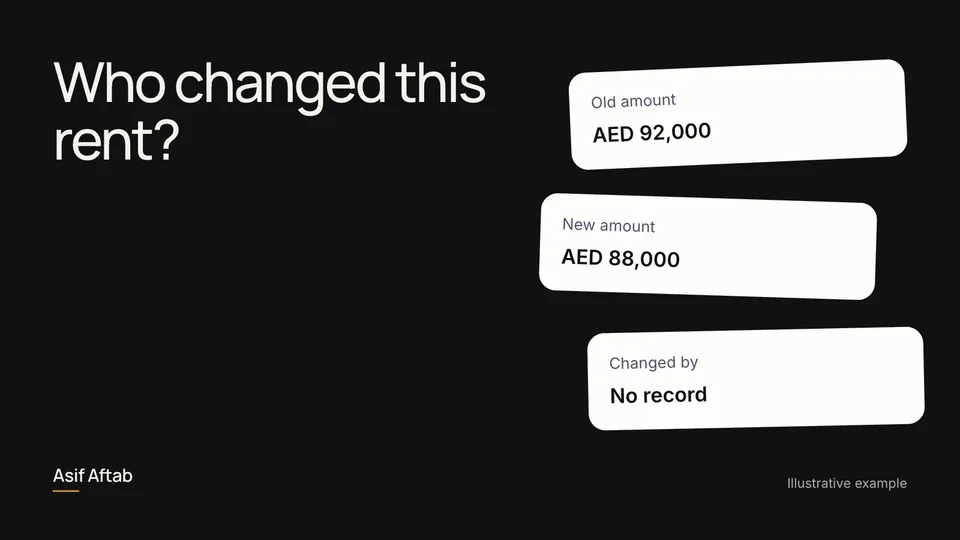
An audit trail records who changed what, when and why. Without one, a UAE property firm cannot answer a simple question from an owner or auditor.