Risk and Compliance
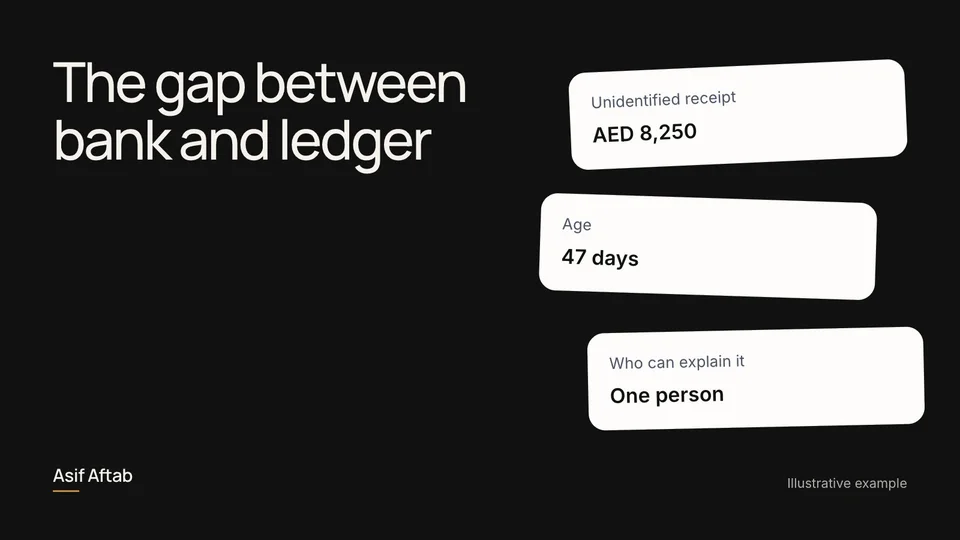
Reconciliation risk: the gap between the bank and the ledger
A reconciliation that balances can still hide risk. What old unidentified items really mean for a UAE property firm, and how to close the gap sooner.
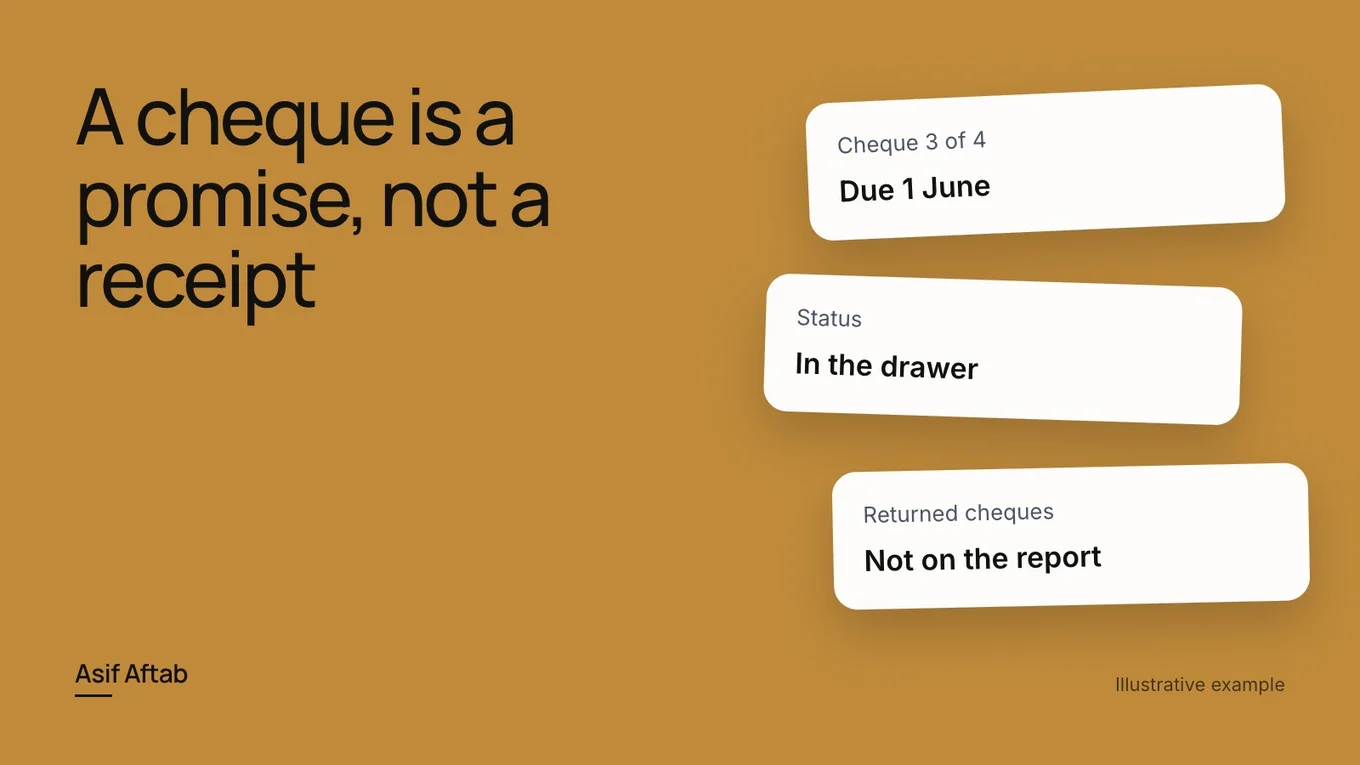
Post-dated cheque tracking breaks down because each cheque is a small workflow, not a line in a spreadsheet. A 300-unit portfolio can hold 1,200 cheques a year, each moving through six states. Once several people update the file, nobody can say with confidence which cheques are banked, returned or replaced.
Most firms start tracking cheques in a spreadsheet. It works well at 40 units. One careful person knows every line.
Then the portfolio grows. The sheet gets a second editor, then a third. The cheques stay in a drawer, and the drawer and the file slowly drift apart.
Nothing dramatic happens. A cheque is banked late. A returned cheque stays marked as cleared. An owner asks about a payment, and it takes an afternoon to answer.
Volume is the first problem. Take an illustrative portfolio.
What 300 units really means
A hundred cheques a month is about five every working day. Each must be found, checked, banked and followed up. That is before renewals, replacements and early terminations.
The second problem is that a cheque changes state. A spreadsheet row shows one state, and it depends on someone remembering to update it.
The life of one post-dated cheque
Each step has a different owner in many firms. Leasing collects. Admin stores. Finance banks. Collections chases. Every handover is a place where the record can fall behind reality.
The failures tend to be quiet. These are the ones to look for.
| Failure | What it looks like | What it costs |
|---|---|---|
| Late banking | A cheque sits past its date | Cash arrives late, and owner payments slip |
| Unrecorded return | Rent shows as collected | Arrears are understated for weeks |
| Duplicate entry | Same cheque on two rows | Reports overstate what is held |
| Lost custody | Nobody can find the cheque | A tenant dispute with no evidence |
| Stale renewal set | Old cheques held after a new lease | Wrong amounts banked |
The most expensive of these is the unrecorded return. It makes the arrears report wrong, and every decision based on it is wrong too. This is also where reconciliation risk starts.
The usual response is to ask people to be more careful. It helps for a month.
The issue is structural. A shared file has no idea what a cheque is. It cannot warn you that one is due tomorrow. It cannot stop someone marking a cheque as banked without a deposit. It cannot show who changed the status.
Good staff can hold this together for a while. Their effort hides the problem, until one of them leaves.
You do not need anything exotic. You need the cheque to be a record, not a cell.
Six things a cheque register should do
The aim is one list that finance, leasing and collections all trust. When that exists, a tenant query takes a minute. A month-end question takes less.
It also gives leadership something useful to watch. Cheques due this week belongs among the numbers worth seeing every Monday.
Firms often forget that a cheque is a physical object. Someone holds it, and it can be lost, misfiled or handed back.
So treat the drawer like a small vault. Use one secure location and a named custodian. Log every removal, and count the cheques against the register at set intervals. A surprise count once a quarter tells you more than any report.
There is no exact unit count where a spreadsheet fails. It depends on staff, turnover and the number of owners.
Watch for the signs instead. Two people edit the same file. Someone keeps a personal copy. Returned cheques are found at month end. A manager asks for a status and gets three answers.
If you recognise two of these, the volume has already passed what the method can control.
Pick ten cheques from your register at random. Find each physical cheque, or the bank proof that it cleared.
Count how many match the file exactly. Then time how long the exercise took.
If one cheque went missing tonight, how long before anyone in your firm would know?
A post-dated cheque is a cheque dated in the future. Tenants in the UAE commonly hand over a set of them at the start of a lease, one for each rent instalment.
Multiply units by instalments. For example, 300 units on four cheques a year means 1,200 cheques a year, or about 100 falling due each month.
Yes, on the same day. Until the return is recorded, reports show rent as collected when it is not. Owners and managers then act on a false picture.
A 20-question self-assessment is in preparation. Leave your email on the newsletter form to hear when it opens.

Real Estate Operations, Risk & Systems Advisor. 20 years in banking risk. Founder, Inovada.
A reconciliation that balances can still hide risk. What old unidentified items really mean for a UAE property firm, and how to close the gap sooner.
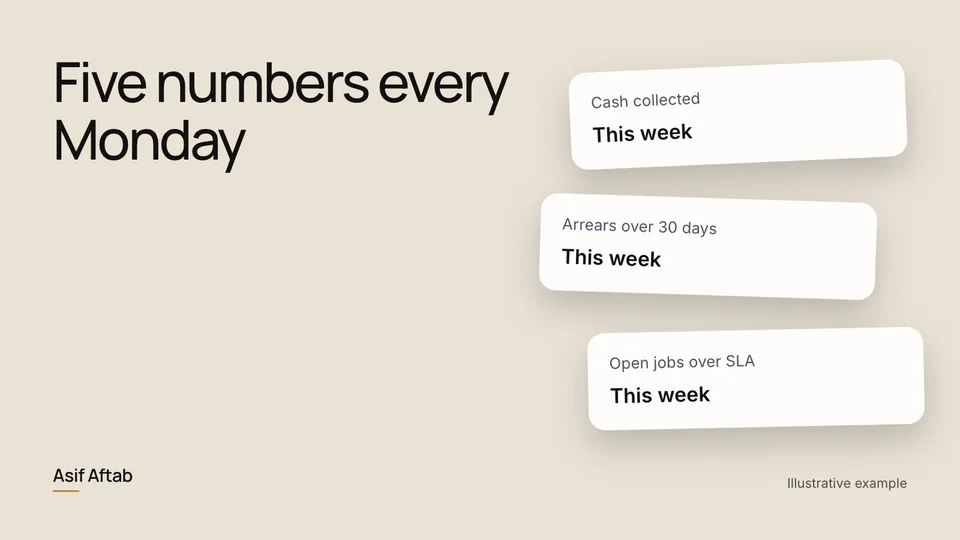
Five weekly numbers show whether a UAE property management firm is under control: cash, arrears, cheques, jobs and renewals. What each one tells you.